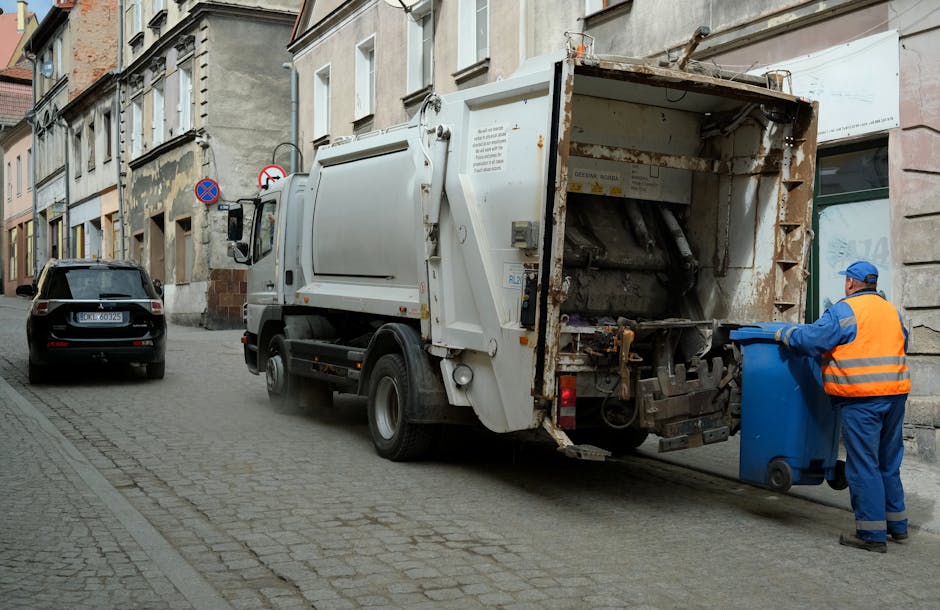
Camden Town NW1 rubbish removal guide for homeowners
If you live in Camden Town NW1, rubbish has a way of building up faster than you expect. One weekend you are clearing a cupboard, and by Sunday evening you are staring at old chairs, broken flat-pack, a bag of mixed waste, and maybe a fridge you definitely do not want to move down the stairs yourself. This Camden Town NW1 rubbish removal guide for homeowners walks you through the sensible, local-friendly way to get waste cleared without turning your front hallway into a tiny skip yard. It covers what counts as rubbish removal, how the process works, what to watch out for in a tight London street, and how to choose the right option for your home.
Truth be told, a lot of the stress comes from not knowing what the job actually needs. Do you need a skip, a wait-and-load collection, or a simple man and van load-up? What about permits, access, recycling, or awkward items like mattresses and appliances? Let's sort it out properly.
Table of Contents
- Why Camden Town NW1 rubbish removal matters
- How rubbish removal works in Camden Town NW1
- Key benefits and practical advantages
- Who this is for and when it makes sense
- Step-by-step guidance
- Expert tips for better results
- Common mistakes to avoid
- Tools, resources and recommendations
- Law, compliance, standards and best practice
- Options, methods and comparison table
- Case study or real-world example
- Practical checklist
- Conclusion
- Frequently Asked Questions
Why Camden Town NW1 rubbish removal matters
Camden Town is lively, dense, and often a bit tight for space. That is part of the charm, and part of the headache when waste starts to pile up. For homeowners, rubbish removal is not just about tidying up. It affects safety, access, neighbours, time, and, if you get it wrong, costs.
In a typical NW1 home, rubbish removal might come up after a loft clear-out, a kitchen refresh, a garden tidy, a move, a bereavement, or just years of "we'll deal with that later." The later usually arrives when you least want it to. A proper plan keeps the job manageable and stops waste from sitting around for days.
It also matters because London streets are unforgiving when it comes to clutter. A pile of waste outside a property can get in the way of residents, deliveries, and passers-by. If you are using a skip or temporary storage on a public road, there may be permit considerations. If you are using a private drive, access can still be awkward. Camden Town homes often have narrow frontage, limited parking, and shared access. Not ideal, but perfectly manageable with the right approach.
Expert summary: the best rubbish removal setup is the one that matches your access, your waste type, and your time pressure. Not every job needs a skip, and not every job is suited to a quick one-off collection.
There is also the environmental side. Responsible rubbish removal should include sorting, recycling where possible, and keeping hazardous items separate. If you care about reducing what ends up in landfill, you will want a provider or method that takes waste handling seriously. That's where services like waste recycling and sustainability become genuinely useful rather than just decorative wording.
How Camden Town NW1 rubbish removal works
At a practical level, rubbish removal is simply the collection, loading, transport, and disposal of unwanted household waste. The details depend on the method you choose.
For a homeowner, the most common approaches are:
- Man and van collection for smaller to medium loads, especially when items are already gathered.
- Skip hire for bigger projects where waste will build up over a few hours or days.
- Wait and load for places where a skip would be awkward or a permit headache.
- Specialist removal for appliances, mattresses, sofas, or hazardous items.
The process usually starts with identifying what you need removed and how much space it will take. Then you choose the most efficient method. If you are not sure, a quick look at skip sizes and prices can help you work out the scale of the job, while what can go in a skip helps you avoid accidental contamination of the load.
Once the collection is booked, you prepare the waste. That means separating items if required, clearing access, and making sure anything restricted is set aside. On the day, waste is loaded and taken for sorting or disposal. If you are using a skip, you fill it within the agreed terms and arrange collection when ready. If you are using a man and van team, they tend to do the lifting and loading for you. Nice and simple, when it goes well.
Here is the part homeowners sometimes overlook: access changes everything. A rear alley, basement flat, shared stairwell, or permit-controlled road can change the best method completely. For example, if there is nowhere safe to leave a skip, a wait and load skip hire option may make more sense than leaving a container on the street for days.
Key benefits and practical advantages
Done properly, rubbish removal is not just about getting rid of clutter. It gives you back time, space, and peace of mind. That sounds simple, but if you have ever spent a Saturday trying to drag a broken wardrobe down two flights of stairs, you know the value immediately.
- Less physical strain: you do not have to hire a van, borrow ladders, or risk your back lifting awkward items.
- Faster clearances: a well-organised collection can clear a property in one visit.
- Cleaner finish: useful if you are preparing for decorating, letting, selling, or moving.
- Better safety: fewer trip hazards, sharp edges, and loose debris around the home.
- Improved recycling potential: more items can be sorted correctly when waste is handled professionally.
There is also a neighbourly benefit, which is easy to underestimate. In a place like Camden Town, where homes are close together and people notice what is happening outside, a tidy, efficient clearance avoids complaints and awkward conversations. Nobody wants to be the household with a sagging pile of black bags sitting on the pavement overnight. To be fair, that is never a good look.
If your waste includes bulky items, specialist disposal services may save you time and prevent damage to your property. For example, old furniture can be awkward to carry down narrow staircases, while white goods often need careful handling. A dedicated fridge and appliance removal service can make that easier, especially when you want the item removed without fuss.
Who this is for and when it makes sense
This guide is aimed at homeowners, but that can mean quite a few different situations. Maybe you are clearing a rental between tenants. Maybe you are finally sorting the garage. Maybe your house just had a mini DIY disaster and the waste has spread from the kitchen into the hall. Happens.
Rubbish removal makes sense if you are dealing with:
- bulky household clutter
- loft, garage, or shed clear-outs
- garden waste after pruning or landscaping
- furniture removal before redecorating
- old appliances and white goods
- mixed domestic waste from decluttering
- post-renovation debris from a home project
It is especially useful where storage is limited and waste cannot sit around. Camden Town homes often have compact rooms, shared entrances, and very little spare space. A homeowner trying to stage waste in a front garden or hallway can end up creating more problems than they solve.
If the job is mainly household clutter, domestic skip hire may be the right fit. If it is a fast one-off clearance, rubbish removal is often more convenient. And if you are dealing with a loft or a garage packed with forgotten stuff, garage and loft clearance can be a very sensible route.
One good rule: if the job feels bigger than a car boot but smaller than a full building project, you are probably in the sweet spot for a flexible removal service. Not scientific, but it works surprisingly well.
Step-by-step guidance
If you want the process to feel smooth rather than chaotic, break it into stages. That alone cuts stress in half.
- Sort the waste into rough categories. Keep general rubbish, reusable items, garden waste, electricals, and hazardous items apart where possible.
- Measure or estimate the volume. Think in terms of bins, sacks, sofa sizes, or how much floor space the pile takes up.
- Check access. Look at stairs, door widths, lift restrictions, parking, and whether a vehicle can stop near the property.
- Choose the right method. Consider skip hire, wait and load, or a load-and-go collection depending on space and timing.
- Confirm any restrictions. If you are unsure about prohibited items, review what can go in a skip or ask before booking.
- Book the collection. If you need quick turnaround, look at same day skip hire or a rapid collection slot.
- Prepare the items. Bag loose waste, dismantle what you can safely, and leave access clear.
- Supervise if needed. If the team needs entry to a rear yard, side passage, or shared area, make sure someone is available.
- Final sweep. Check for nails, splinters, or small debris. Tiny bits always hide in plain sight.
If you are leaning toward a skip, reading through skip hire options first helps you choose the right size and format. For tighter residential streets, enclosed and lockable skip hire may also be worth considering, especially if you want to keep waste protected between fills.
Expert tips for better results
Most waste removal problems are avoidable with a little planning. Here are the habits that tend to make the biggest difference.
- Do the heavy sorting before the team arrives. A few minutes separating wood, metal, and general rubbish can save a lot of time.
- Keep hazardous items out of mixed loads. Paints, solvents, chemicals, gas canisters, and certain electricals need special handling.
- Think vertically. Break down furniture where safe to do so. A dismantled wardrobe is much easier to remove than a stubborn one-piece monster.
- Protect floors and hallways. Old towels, cardboard sheets, or moving blankets can stop scuffs on narrow staircases.
- Check the weather. A wet Camden morning can make cardboard and soft waste heavy fast. Not ideal.
- Match the method to the street. Busy road, awkward parking, or restricted frontage? Then a wait and load or grab-style service may be more efficient than a skip.
A useful trick: keep a "definitely going" pile and a "maybe" pile. It sounds obvious, but people spend ages hesitating over items they do not really want. Put bluntly, if you have not used it in three years and it is not sentimental, the garage probably does not need it.
If your project is part of a larger home refresh, you may also want to look at house clearance for full-property jobs or garden waste removal if the mess has moved outdoors. Small choices like that make the whole thing feel less like a wrestling match.
Common mistakes to avoid
Homeowners usually do not get rubbish removal wrong because they are careless. They get it wrong because they underestimate the practical bits.
- Choosing the wrong service type. A skip may be unnecessary, or a van load may be too small for the job.
- Forgetting access restrictions. A booked collection can be delayed if the crew cannot get near the property.
- Mixing restricted items into general waste. That can cause extra charges or refusal of collection.
- Overfilling a skip. Waste above the fill line can make collection unsafe or impossible.
- Leaving items outside too early. This can cause complaints, weather damage, or street obstruction.
- Ignoring permits. If a skip is going on the public highway, this needs checking in advance.
One of the most common mistakes in Camden Town NW1 is assuming all roads and frontages behave the same. They do not. A short terrace, a shared mews, a basement flat, and a maisonette can each need a different waste plan. That is where a little local experience saves a lot of back-and-forth.
If you need a clearer grasp of permissions, have a look at skip hire permits and skip permits. The terms overlap in practice, and the main point is simple: if the container is on the street or another public area, check the requirement before the lorry turns up. Nothing glamorous there, just sensible planning.
Tools, resources and recommendations
You do not need a van full of equipment to manage rubbish removal well, but a few simple tools help.
- Heavy-duty sacks for loose household waste
- Gloves to handle sharp or dusty items
- Basic screwdriver or drill for dismantling furniture
- Tape measure for skips, doorways, and access checks
- Marker labels to separate keep, donate, recycle, and remove
- Dust sheets or cardboard to protect floors
For homeowners comparing methods, the most useful reading is often service information rather than generic advice. A quick scan of skip sizes and prices can give you a realistic sense of cost and capacity. If your project is lightweight and speedy, man and van collections are often a better match. For bigger or heavier loads, grab hire services can be a practical option when space is limited and the waste needs to be lifted out quickly.
There are also more specialised pages that help when the waste is not standard household junk. If you are dealing with leftover renovation material, builders waste removal or builders skip hire may be more appropriate. For a larger project, construction waste disposal and construction waste clearance offer a better fit than a standard domestic setup.
Law, compliance, standards and best practice
Waste removal in the UK is not just a logistics issue. It also comes with legal and environmental responsibilities. You do not need to become a compliance expert, but you do need to avoid leaving waste in the wrong hands or sending the wrong materials into a mixed load.
As a homeowner, the important points are straightforward:
- Use a reputable carrier. Your waste should be taken by a business that handles disposal responsibly.
- Separate hazardous materials. These often need specialist disposal and should not be mixed with general rubbish.
- Be honest about waste type. The quote and collection plan depend on it.
- Respect access and public space rules. Particularly relevant for street skips and tight Camden roads.
- Keep records if needed. For larger clear-outs, keeping a note of what was removed can be useful.
Best practice also means thinking about recycling and re-use before you dispose. A mattress that has reached the end of its life is one thing; a pile of furniture in decent condition is another. Some items may be better removed as part of a broader house clearance rather than thrown into a mixed skip. And if your load includes confidential papers, a discreet service like confidential shredding is the safer route.
For bulky household waste, it is also worth checking that appliances and white goods are handled correctly. Old fridges, freezers, and cookers are not just "another bit of rubbish." They often need proper treatment, and a specialist collection helps avoid mistakes.
Options, methods and comparison table
There is no single best method for every Camden Town home. The right choice depends on access, speed, volume, and whether you want to do the lifting yourself.
| Method | Best for | Pros | Watch out for |
|---|---|---|---|
| Man and van | Smaller to medium household clearances | Quick, flexible, crew does the lifting | Less suitable for long multi-day projects |
| Skip hire | Ongoing DIY, refurb, or larger clear-outs | Good capacity, can fill over time | Needs space and possibly a permit |
| Wait and load | Short stop collections in busy or restricted streets | No skip left on site, efficient for access issues | Needs the waste ready to load promptly |
| Grab hire | Heavy or bulky loads with limited access | Fast loading, helpful for mixed heavy waste | Needs workable vehicle access nearby |
| Specialist item removal | Appliances, mattresses, sofas, select materials | Safe handling and proper disposal route | May need booking for specific item types |
If you are unsure which route is better, ask yourself one question: do you want time or flexibility? If you want the waste gone today and have little space, a rapid collection is often better. If you are clearing a house over several days, a skip may be more practical. Simple, really.
For items like sofas or mattresses, it can help to use a dedicated disposal service rather than general waste removal. The same goes for large kitchen appliances. That way, you avoid clogging up a mixed load with awkward items that should be handled separately.
Case study or real-world example
Here is a realistic Camden Town scenario. A homeowner in NW1 decides to clear a first-floor flat before redecorating. The waste includes two broken wardrobes, a mattress, several bags of general clutter, old blinds, and a rusted small freezer in the kitchen. The front street is narrow, parking is unpredictable, and there is no sensible place to leave a skip for long.
A full skip would be possible, but not ideal. The better fit is a mixed removal approach: the mattress and freezer are separated for specialist handling, while the rest of the waste is taken in one scheduled load. The homeowner clears the hallway first, the team arrives with enough labour to manage the stairs, and the whole job is done in a single visit. No long-term obstruction outside, no repeated lifting by the homeowner, and no lingering pile of rubbish in a shared entrance.
That is the kind of job where a little planning makes the difference between a decent day and a miserable one. You might even get the place back to a clean, echo-y kind of quiet by tea time. There is something satisfying about that sound, by the way. The room feels bigger the moment the clutter leaves.
Practical checklist
Use this before you book anything.
- Have I sorted waste into general, bulky, recyclable, and hazardous groups?
- Do I know roughly how much needs removing?
- Is access straightforward, or do I need a service that handles lifting?
- Will waste go on private land or the public road?
- Do I need to check a permit?
- Have I measured doorways, hallways, or stair access?
- Are there any items that need special handling?
- Do I want a same-day clearance or a more flexible booking?
- Have I protected floors and cleared a path to the waste?
- Do I know what will happen to the waste after collection?
If you can answer most of those questions, you are in good shape. If not, that is fine too. It just means you need a bit more detail before you book.
Conclusion
Camden Town NW1 rubbish removal does not need to be complicated. The trick is choosing a method that matches the property, the access, and the type of waste you actually have. For homeowners, that usually means balancing convenience, speed, and the realities of London streets. Once those pieces are lined up, the whole process becomes much easier than it first appears.
Whether you are clearing one room or a whole house, a bit of structure goes a long way. Check the waste type, think about access, compare your options, and keep hazardous or specialist items separate. That is the heart of a good rubbish removal plan, and it saves a surprising amount of stress.
Get a free quote today and see how much you can save.
And if all you needed was a clearer plan, hopefully you have that now. Sometimes the clean-up starts with the paperwork, not the shovel.
Frequently Asked Questions
What is the best rubbish removal option for a Camden Town NW1 homeowner?
It depends on access and volume. For a quick household clearance, man and van or a scheduled rubbish removal service is often easiest. For bigger, ongoing jobs, skip hire may be better.
Do I need a permit for rubbish removal in Camden Town NW1?
Not always. You usually only need to think about permits if a skip or container will sit on the public road or another public space. If it stays on private property, a permit may not be needed.
Is a skip better than a man and van service?
A skip is better when you want time to load waste over several days. A man and van service is better when you want the team to load everything quickly and take it away in one go.
What items can usually go in a skip?
General household waste, furniture, wood, garden waste, and many DIY materials can often go in a skip, but restrictions apply. It is best to check before booking, especially for electricals or hazardous materials.
Can I get rid of a fridge or freezer as part of rubbish removal?
Yes, but it is usually better to arrange a specialist appliance removal service. White goods need proper handling and should not just be mixed with normal rubbish.
How do I know what size service I need?
Start by estimating volume. A few bags and one sofa are very different from a loft full of clutter. If you are unsure, compare service options and sizes before choosing, or ask for guidance based on your load.
Is same-day rubbish removal available in NW1?
Sometimes, yes. If the schedule allows and access is straightforward, same-day collection can be possible. It is usually best for urgent clear-outs or awkward last-minute jobs.
What if my waste includes old furniture and general clutter?
That is common. Mixed household waste is often handled through rubbish removal or domestic skip hire, depending on size and access. Break down large items where safe to do so.
How can I avoid extra charges?
Be accurate about the waste type, don't overfill a skip, and make sure access is clear. Hidden hazards, blocked entry, or inaccurate descriptions can all lead to avoidable cost issues.
What should I do with hazardous waste?
Keep it separate and do not put it in a mixed domestic load unless the service explicitly says it is allowed. Hazardous items need specialist handling for safety and compliance reasons.
Can rubbish removal help after a loft or garage clear-out?
Absolutely. Loft and garage jobs are some of the most common reasons homeowners book waste clearance. They often involve mixed clutter, dusty items, and bulky things that are awkward to move alone.
Is recycling included in rubbish removal?
It should be, where practical. A responsible provider will sort materials for recycling when possible and handle the remainder correctly. If sustainability matters to you, ask about that upfront.